
R-Series
R9
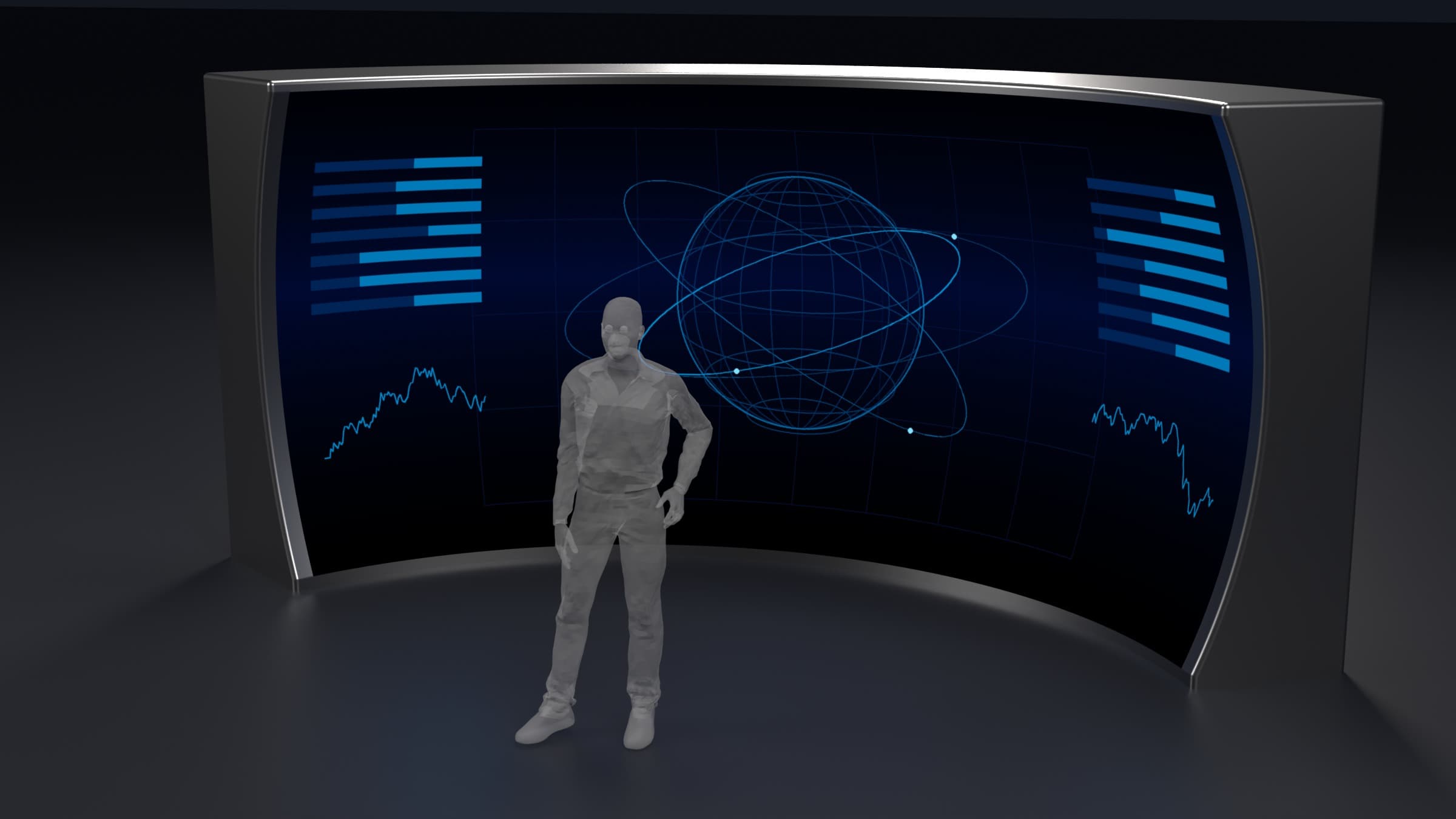
A crew at their stations, sharing one out-the-window view.
Geometry
- Radius
- 9 ft
- Display plane
- 18 ft / 5.49 m
What this scale serves
The R9 is sized around a crew rather than an audience. Everyone is at a station, the stations face the same way, and the surface has to hold a believable outside world across all of them at once — which is a harder geometric problem than filling a room, because the design eyepoint has to serve several seats.
That is where a true spherical surface stops being a preference. On a faceted or blended approximation, off-eyepoint seats accumulate angular error, and the crew member who is not at the sweet spot is looking at a slightly different world than the one who is. Curvature removes the failure rather than mitigating it.
It is also the size that most often goes into a structure that was designed around something else — a cockpit shell, an existing trainer, a bay with fixed dimensions. Bring the room to the first conversation.
In progress
Not yet installed, and deliberately kept out of the fielded record above.
01 · R9
NASA Johnson Space Center, Houston, Texas
2026 — An R9 in progress.
What varies per installation
Degrees of horizontal and vertical field, mounting, drive and power are configured per installation rather than fixed by the family, and the cut sheets carry the values. Ask us and we will send them.